If you have a tree that needs to come down, the usual approach is to ring round. You find two or three names, wait for them to visit, and wait again for a price. Some never call back. When the prices do arrive they can be hundreds of pounds apart, with no way of knowing which is fair.
This article explains how to use Emmerdale Agriculture to get several quotes for tree work from one description. It also covers what to tell contractors so the prices are accurate, how to compare them, and the rules worth checking before anyone starts a saw.
What kind of tree work is this for?
Tree surgeons and arborists are part of our network, alongside forestry contractors and agricultural contractors with felling and chipping kit. Between them they cover most tree work:
- Felling single trees, or a group, in a garden, field, paddock or along a boundary
- Pruning and crown work, such as crown reductions, crown lifting and thinning
- Sectional felling, where a tree near a house or a road has to be climbed and taken down piece by piece
- Windblown or dead trees that have come down or are leaning
- Self-seeded trees and scrub taking over a paddock or field edge
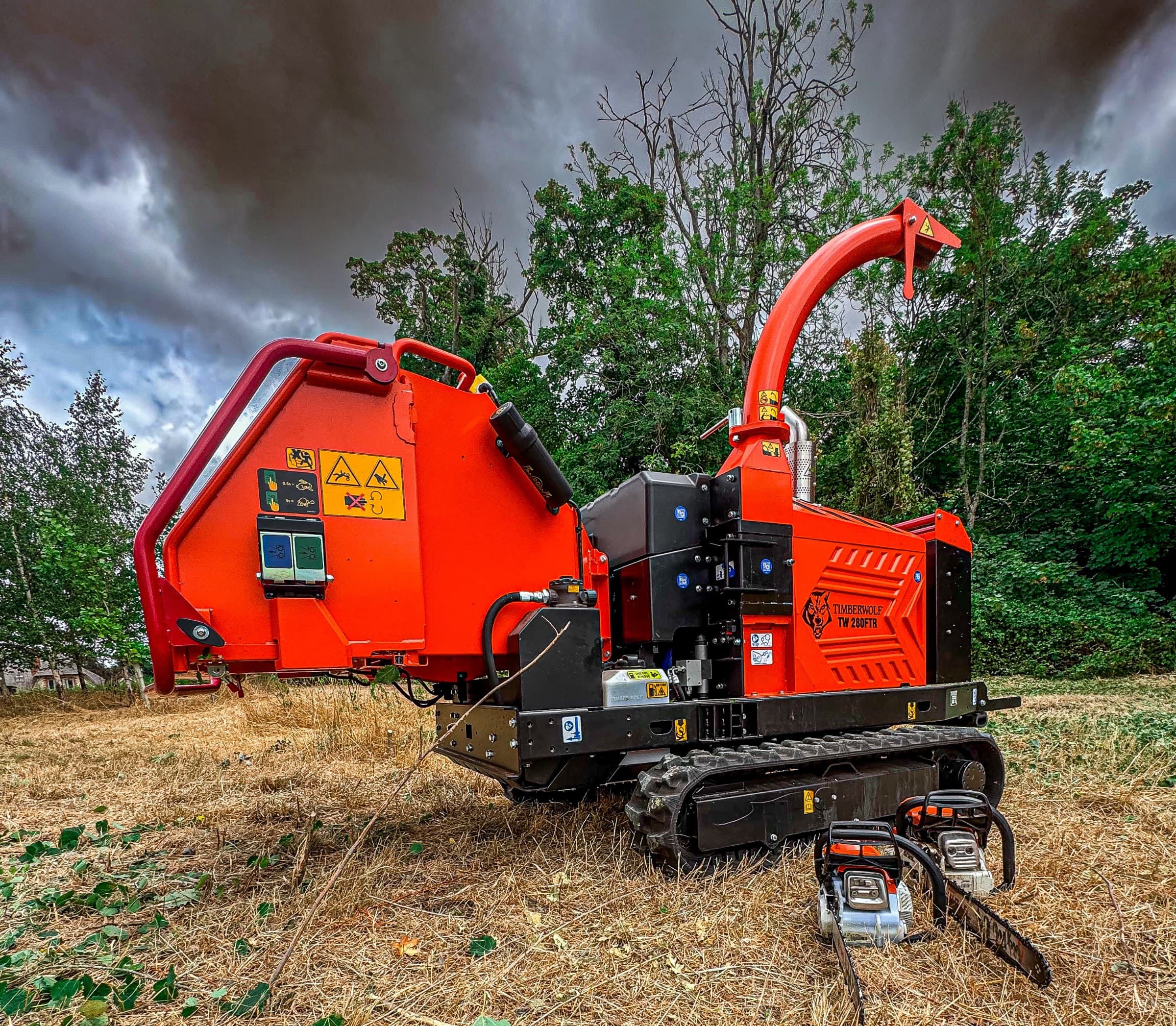
- Chipping the brash after felling, or clearing it away
- Stumps ground out or mulched, alongside fixed tooth mulching for scrub and saplings
- Logging up the trunk so you can keep the firewood
You don't have to work out which kind of contractor you need. Describe the job and the businesses that do that work in your area will price it. For a tall tree beside a house, that will usually be a tree surgeon who climbs. For a dozen self-seeded ash trees along a field edge, a forestry or land contractor with a tractor and chipper may give you the better price. Either way, you see the prices side by side.
Describe the job once
Start at the job form and pick tree felling and chipping. Give your postcode and describe the job in your own words. It takes a minute or two, and there is nothing to pay to ask.
The more you say, the more accurate the prices will be. The things contractors most want to know are:
- How many trees, and roughly how big. Height and trunk thickness are both useful. "About as tall as the house" is fine.
- What kind of tree, if you know. Ash, oak, conifer and willow all behave differently.
- What is nearby. Houses, sheds, fences, power lines, roads and greenhouses all change how a tree has to come down.
- Access. Can a tractor and chipper get to it? How wide is the gateway? Is the ground firm or soft?
- What you want done with the wood. Chipped and left, chipped and taken away, logged up for you to keep, or the lot removed.
- Stumps. Left at ground level, or ground out?
- Photos. Take one of the whole tree and one showing what is around it. A photo answers most of the questions above at once.
Contractors who cover your area price it
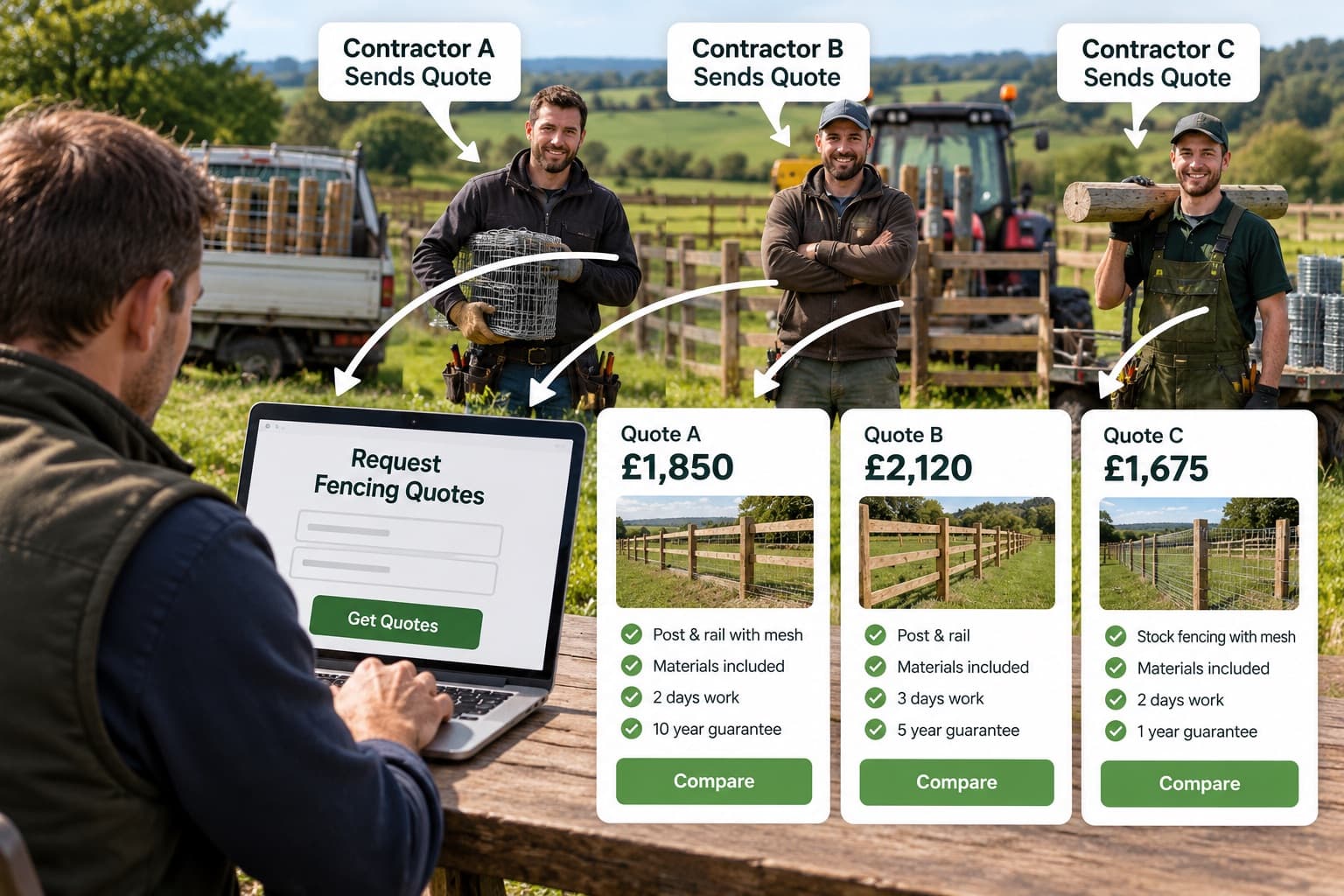
Your job goes to the approved contractors who cover your postcode. Each one prices it on their own and none of them can see what the others have quoted, so you get each contractor's honest figure.
Prices usually start arriving within 24 hours. You get an email as each one comes in, and they all appear together on one page for your job.
For tree work, some contractors will want to see the tree before they commit to a final price. That is normal, particularly for big trees or tricky sites. You can book them subject to a visit. If their price changes after they've seen it, you can accept the new figure or say no.
Compare more than the price
Prices for tree work vary more than most jobs, because two contractors can plan to take the same tree down in completely different ways. When you compare them, look at:
- The full price. This is what you pay. Our fee is already included, and each price says whether VAT is.
- What the price includes. Check whether the brash is chipped, whether the chippings and timber are taken away, and whether the stump is ground out. A cheap price that leaves you with a pile of branches isn't cheap.
- Their note to you. Contractors often say what kit they will bring, when they could come, and what they've assumed about the job.
- Ratings from previous customers, and how far away they are.
If anything is unclear, message the contractor from your job page before you decide. You don't need to hand out your phone number to ask a question. For more on comparing prices, see how to compare the market for paddock work.
Questions worth asking about tree work
Tree felling is dangerous work, so it is worth asking any contractor a few questions directly before you book:
- What chainsaw qualifications do you hold? In the UK these are usually NPTC or Lantra certificates. What someone is qualified to do is their responsibility as an independent business, and we don't check certificates for you, so ask.
- How will the tree come down? Felled in one piece, or taken down in sections?
- Will you clear up afterwards, and what will be left on site?
- When can you come? Tree work is often booked for autumn and winter, so contractors may be busier then.
Check the rules before anyone starts
Some trees need permission before they can be felled or cut back. The rules below apply to England. Wales and Scotland have their own versions, so check with your local council if you're not sure.
- Tree Preservation Orders. If a tree has a TPO, you need written consent from your local council before it is felled or pruned. The council can tell you whether a tree is protected.
- Conservation areas. In a conservation area, you usually have to give the council six weeks' notice before working on most trees.
- Felling licences. Felling large amounts of timber outside a garden may need a felling licence from the Forestry Commission in England, Natural Resources Wales or Scottish Forestry. Garden trees and small amounts are usually exempt.
- Nesting birds. It is an offence to damage or destroy an active bird's nest. Most nesting happens between March and August, which is one reason why autumn and winter are the usual season for tree work.
- Bats. Bats and their roosts are protected. Old trees with holes, cracks or loose bark can hold roosts. If you think a tree might, say so in your description.
The responsibility for getting permission usually sits with the owner of the tree, so it is worth checking before the job is booked rather than on the day.
Book the one you want
When you accept a price, you pay a 15% deposit by card to book the job. That is all that is taken up front.
The contractor gets in touch to agree a date. When the work is done, they mark the job as finished and you get an email. You then have three working days to confirm you're happy or tell us about a problem. The balance is only taken once you confirm, or once those three days pass without you raising anything.
Why book through the site?
- We check every contractor before they see a job. We confirm who they are and that they run a working contracting business, and we talk to them before any job reaches them.
- Every job is covered by our insurance. We carry £5 million of public liability cover on every job done through the service. If something goes wrong, you deal with us.
- You pay us, not the contractor. If the work isn't right, you raise it with us and we sort it out with the contractor.
Quick answers
Are the contractors tree surgeons? Many are. Tree surgeons and arborists have joined the network, alongside forestry and agricultural contractors who fell and chip. Your job goes to the ones who cover your area, so the prices you get may come from either kind.
Do I need a tree surgeon or a land contractor? For tall trees close to buildings, or pruning work like crown reduction, you want a tree surgeon who climbs. For felling in fields and paddocks, clearing scrub and self-seeded trees, or dealing with windblown trees, a land contractor with a winch and a chipper can often do the job too. Describe what you need and compare the prices.
Is there a charge for getting quotes? No. Posting a job is free, and there is no obligation to accept any of the prices you receive.
How quickly will I get prices? Prices usually start arriving within 24 hours. Some contractors will want to visit the site first for larger trees.
When is the best time of year to fell a tree? Autumn and winter are the usual season. The leaves are off, the ground is often firmer for machinery, and it avoids the main bird nesting season. A dangerous tree should be dealt with whenever it needs to be.
Can I keep the wood? Yes. Say so in your description and contractors can log it up and leave it for you, which leaves them less to take away.
When you're ready, describe your tree job here and see what comes back.