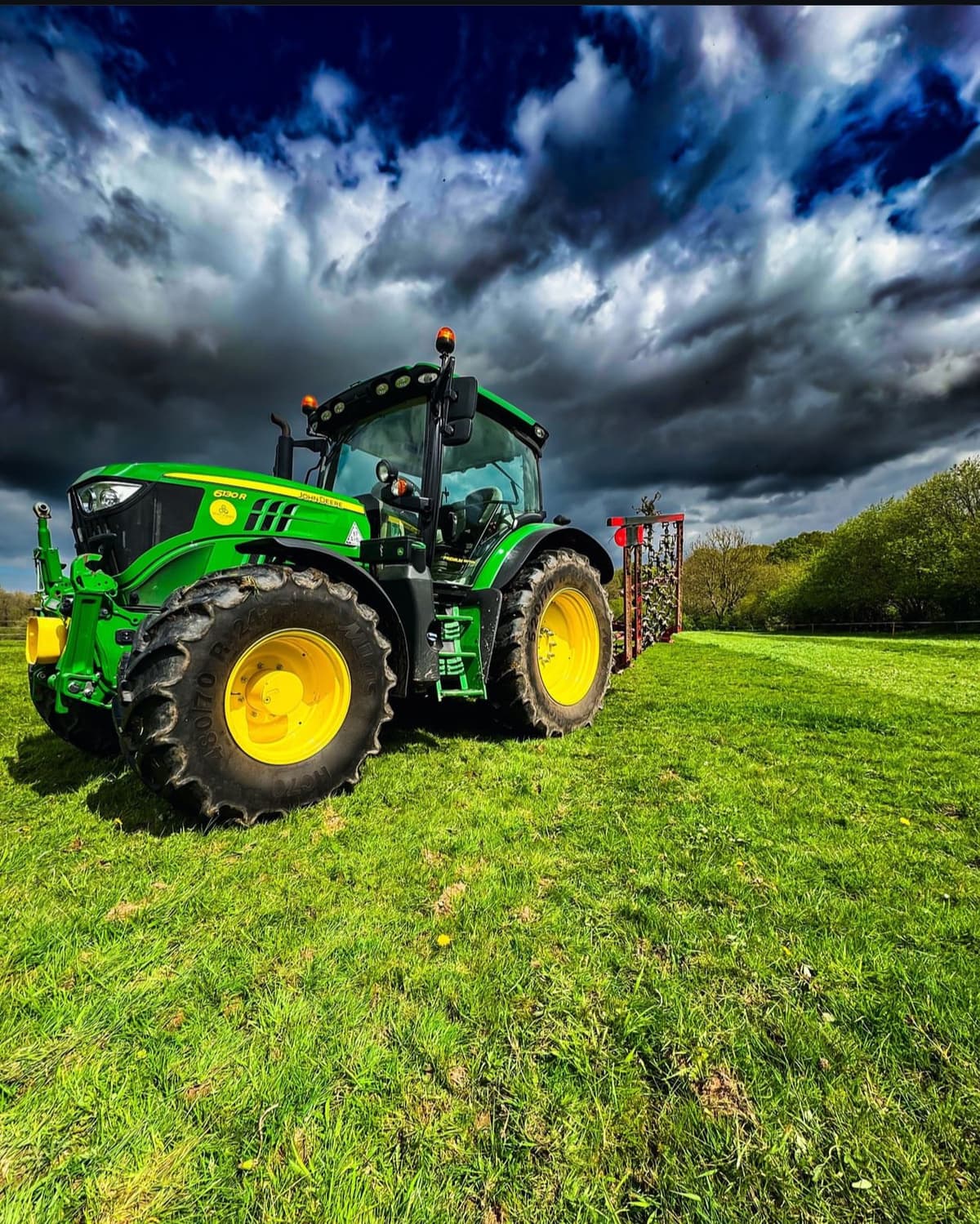
Harrowing grass means pulling a harrow across a field or paddock to rake out dead grass and moss, knock in or spread molehills and droppings, level out poaching, and open the surface so air, water and fertiliser get in. For most paddocks and grass fields it is a light, quick job done with a chain or grass harrow behind a tractor or compact tractor. Whether it is the right job for your ground depends on what you want it to fix, and that is what this article covers.
If your question is when to harrow and how often, we have written that up separately in When to harrow a paddock: timing, frequency and what it actually does. This piece is about the other half of the decision: which kind of harrowing you need, how it compares with the jobs it gets confused with, and what to tell a contractor so the price you get back matches the work.
What harrowing grass actually does
A harrow is dragged, not driven. It has no power of its own, so it works the top of the sward rather than the soil underneath. On grassland that means:
- Pulling out thatch and moss. Dead material sitting at the base of the grass gets dragged out and left on the surface to dry and break down.
- Levelling. Molehills, hoof marks and rutting from winter use get knocked down and spread.
- Spreading droppings. On horse paddocks especially, harrowing breaks up dung piles so they dry out rather than leaving rank, sour patches the horses won't graze.
- Opening the surface. A lightly scratched sward takes up fertiliser, lime and seed better than a matted one.
What it does not do is fix compaction, drainage or bare ground on its own. If the field is waterlogged or the grass is thin, harrowing is usually one step in a sequence rather than the whole answer.
Types of harrow you'll hear about
When you ask contractors for prices, they may mention different kit. The main types for grassland:
Chain or grass harrow
The common one. A mat of linked chain, often with short tines on one side and flatter links on the other. Run one way up it is gentle and mostly levels and spreads; flipped over it bites harder and pulls out more thatch. This is what most people mean by harrowing a paddock.
Tined or spring-tine harrow
Rows of sprung steel tines that comb through the sward more aggressively. Closer to scarifying in effect, and useful where there is a lot of moss or a heavy mat of dead grass. It can look rough for a couple of weeks afterwards.
Meadow or combination harrows
Some contractors run harrows that combine levelling boards, tines and sometimes a seeder box or roller in one pass. These are handy if you want to harrow and overseed together, or harrow and roll without two visits.
You don't need to specify the kit yourself. Describe the ground and the problem, and a contractor will tell you what they'd run.
Harrowing, scarifying, rolling: which do you need?
These three get mixed up, and asking for the wrong one is the commonest reason a job doesn't do what the owner hoped.
- Harrowing is for general tidying: droppings, molehills, light thatch, a bit of poaching. Regular maintenance.
- Scarifying is heavier. It cuts or rakes deep into the thatch layer to clear moss and dead growth that a chain harrow would just skate over. See scarifying grassland and paddocks.
- Rolling presses the surface back down, firming soil around roots and flattening ground lifted by frost or hooves. It is often done after harrowing, on ground that is dry enough not to smear. See paddock and field rolling.
If the field is properly compacted or holds water, none of these will sort it, and something like subsoiling or drainage work is the conversation to have.
Before you book: things to sort out
A few practical points make the job go better and make prices easier to compare.
Pick up or deal with droppings first if you prefer. Harrowing spreads dung across the paddock. Many horse owners would rather collect it beforehand, either by hand or with paddock muck sweeping, and harrow afterwards. Others harrow and rest the field. Decide which you want before the contractor arrives.
Top it if it's long. A harrow struggles in tall, rank grass. If the paddock is overgrown, topping first, or asking for both in one visit, gives a better result.
Check ground conditions. Harrowing very wet ground smears and tears the surface; harrowing bone-dry ground does little. A contractor who knows the work may suggest waiting a week, and that is usually worth listening to.
Clear obstructions. Jumps, poles, water troughs on the move, loose fencing wire and buried hazards all slow the job down or damage the harrow. Mention anything you can't move.
Think about what follows. If you plan to spread fertiliser or lime, or overseed bare patches, harrowing first helps it get to the soil. Bundling jobs into one description often makes sense for the contractor too.
What to tell a contractor
The more a contractor knows, the less guesswork goes into the price. Include:
- Size of the area, in acres or hectares if you know it, or a rough description if you don't.
- What you want fixed: droppings, molehills, moss, poaching, prep for seed.
- Access: gate width, whether a full-size tractor can get in or it needs something compact, soft ground on the way in, livestock in the field.
- Slope and shape: steep banks, tight corners and lots of small separate paddocks all affect how long it takes.
- Timing: whether you have a window, and whether the field needs to be empty of horses or stock.
- Any extra jobs: rolling, topping, overseeding, spreading.
Photos help a lot, particularly of the gateway and the worst bit of the field.
What affects the price
We don't quote a figure here because harrowing prices vary with the job, but the factors are consistent: the area, how far the contractor has to travel, access and the size of machine that can get in, how many separate fields there are, and whether it's combined with other work. Combining harrowing with rolling or topping on the same visit often works out better than separate trips. For a broader sense of what land work costs, see what land work costs per acre, and the paddock harrowing service page covers the job in more detail.
Getting prices for harrowing
If you'd like a few prices, you can describe the job and post it here. It goes to local agricultural contractors in our network across the UK, who reply with prices, and you choose whether to go ahead. Contractors are checked for identity and that they're a working contracting business, and we speak to them before any job reaches them. Work booked through us is covered by Emmerdale Agriculture's own public liability policy. You can also browse paddock maintenance contractors by county to see who works near you.