Harrowing is one of the most common jobs carried out on paddocks and grassland, but it is also one of the most misunderstood.
For many landowners, harrowing simply means driving over a field with a set of chain harrows in spring. Done at the right time and for the right reasons, however, harrowing can be a valuable part of maintaining healthy grassland.
Done in the wrong conditions, it can achieve very little, and in some cases can actually damage the pasture.
So, when should you harrow a paddock, what does it actually achieve, and does your field really need doing?
What is harrowing?
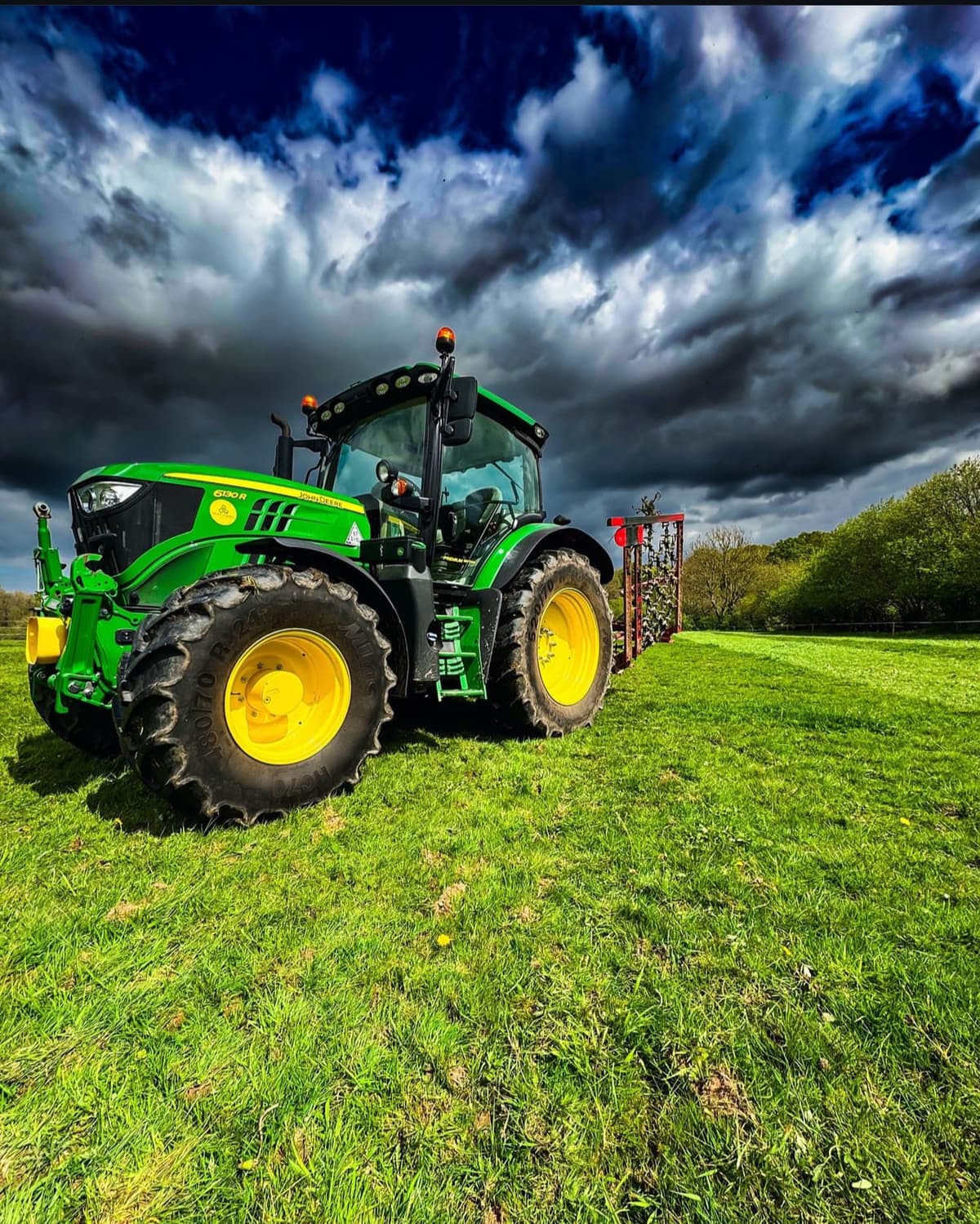
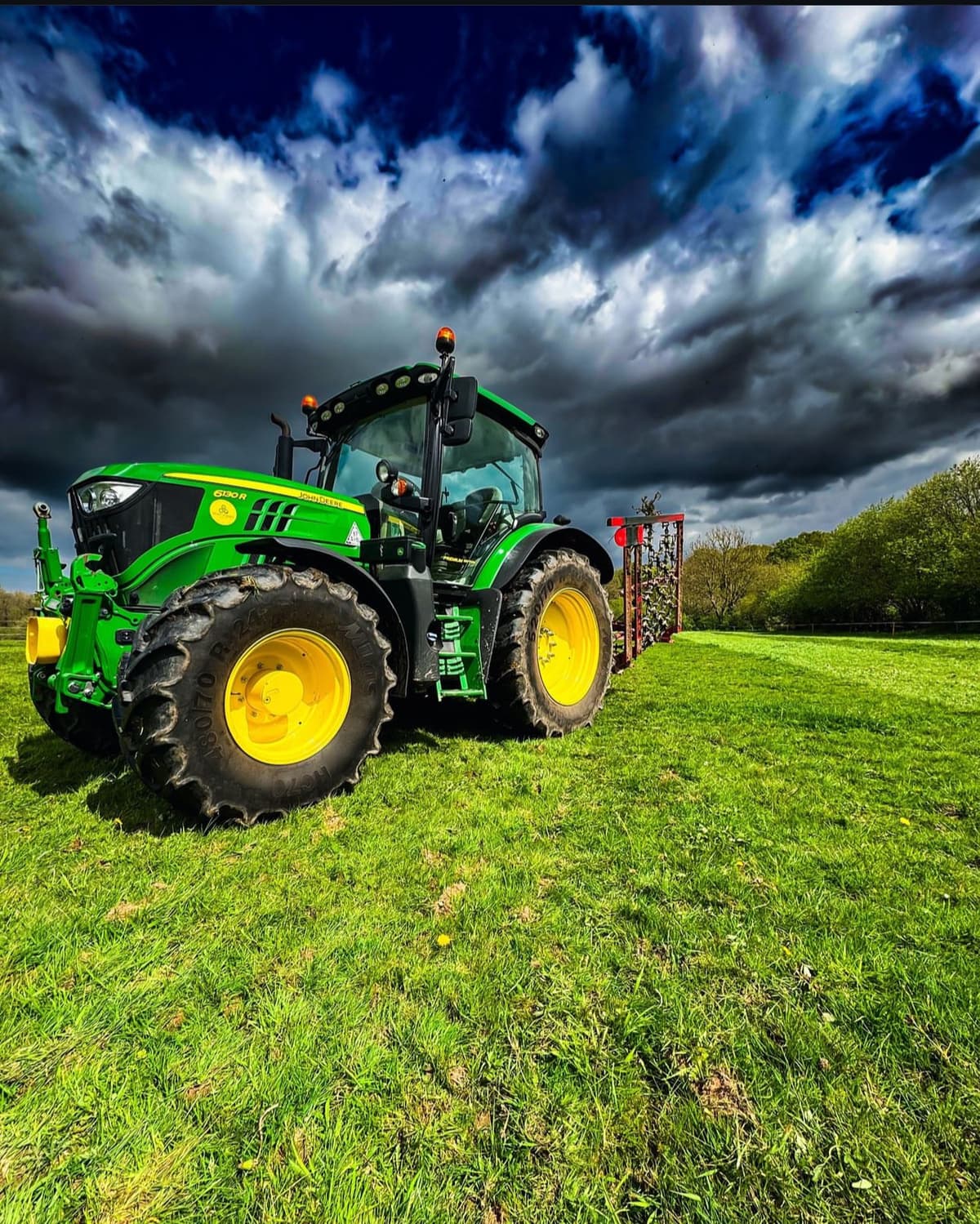
Grass harrowing usually involves pulling a set of chain or grass harrows behind a tractor or suitable ATV.
The harrows have metal tines which work across the surface of the field, disturbing dead vegetation and other material within the base of the sward.
Depending on the type of harrow, its weight and how aggressively it is set, the operation can range from a relatively light surface treatment to considerably more aggressive scarification.
The important point is that harrowing is primarily a surface operation.
It should not be confused with aeration or subsoiling, which are intended to address compaction deeper within the soil.
What does harrowing a paddock actually do?
One of the main purposes of harrowing established grassland is to remove dead grass and accumulated material from around the base of the plants.
Over time, a layer of dead vegetation can develop within the sward. Harrowing helps pull some of this material out, opening the grass canopy and creating space for new growth.
It can also disturb shallow moss and lightly scratch the soil surface.
This can be particularly useful when overseeding because grass seed needs good contact with the soil to establish successfully. Simply broadcasting seed onto a dense layer of existing vegetation is unlikely to produce the best results.
Harrowing before or as part of an overseeding operation can therefore help create better conditions for germination.
Harrowing horse paddocks
Harrowing is particularly common on horse paddocks.
Horse grazing often produces an uneven pasture.
Some areas are grazed very closely, while other areas become long and rank. Horses also create concentrated dung areas which they may avoid grazing.
Harrowing can help tidy the surface and break up accumulated material.
However, there is an important consideration when it comes to horse manure.
Should you harrow horse droppings?
Chain harrows are frequently used to break up and spread horse droppings.
This distributes the manure rather than leaving concentrated piles around the paddock and can help the material break down.
But spreading horse manure across grazing pasture also has implications for parasite management.
If horses are immediately returned to the same pasture, harrowing can potentially distribute parasite eggs and larvae beyond the original dung areas.
For this reason, harrowing should not be viewed as a replacement for an appropriate parasite-control programme.
Where manure is being harrowed, factors including weather conditions, pasture resting, stocking density and the yard's veterinary or parasite-management programme should all be considered.
When is the best time to harrow a paddock?
Spring is traditionally associated with harrowing, but there isn't a single date when every paddock should be harrowed.
Ground conditions are far more important than the calendar.
The soil needs to be firm enough to carry the tractor and equipment without causing rutting, smearing or unnecessary compaction.
If the field is waterlogged or extremely soft, it is generally better to wait.
Driving machinery across saturated ground can cause more damage than the harrowing is intended to correct.
The grass should also ideally be relatively short. Trying to aggressively harrow through a very long, dense sward is considerably less effective than working through shorter vegetation.
This means a paddock may sometimes benefit from grazing or topping before it is harrowed.
Can you harrow in autumn?
Yes.
Harrowing isn't exclusively a spring operation.
A light autumn harrow can sometimes be useful, particularly as part of an autumn pasture renovation or overseeding programme.
Again, conditions matter.
An early autumn operation while soils remain relatively warm and workable is very different from taking a tractor onto saturated ground later in the year.
If overseeding is planned, sufficient soil temperature and moisture also need to remain for the new grass to germinate and establish.
Harrowing before overseeding
Harrowing and overseeding can work particularly well together.
One of the biggest mistakes when overseeding existing grassland is simply spreading seed across the top of a thick established sward.
Grass seed needs access to moisture and good contact with the soil.
A typical renovation programme might therefore involve:
Mow or graze the existing grass down → harrow/scarify → overseed → roll
The harrow helps open the existing sward and expose areas of soil.
The seed can then reach the surface rather than becoming suspended amongst existing vegetation.
Rolling afterwards helps improve seed-to-soil contact.
For paddocks with significant bare areas, poaching or deterioration, more substantial renovation may be required.
Harrowing does not solve soil compaction
This is an important distinction.
A field can look considerably better after being harrowed while still having a serious compaction problem underneath.
Chain harrows generally only work within the very top layer of the pasture.
Compaction caused by horses, livestock, tractors or repeated traffic can exist much deeper within the soil profile.
When this happens, grass roots may struggle to penetrate the compacted layer and movement of water and air through the soil can be restricted.
The result can be poor drainage, shallow rooting and disappointing grass growth despite the surface appearing reasonably healthy.
Where compaction is suspected, the soil should be assessed separately.
Depending on the depth and severity of the problem, an aerator, slitter or subsoiler may be more appropriate than simply harrowing the field.
Harrowing won't fix every poor paddock
It is tempting to treat harrowing as a general cure for tired grassland.
It isn't.
Poor grass growth can have many causes, including:
- Soil compaction
- Incorrect soil pH
- Low or unbalanced nutrient levels
- Poor drainage
- Heavy grazing pressure
- Poaching
- Weed infestation
- Inappropriate grass species
- Insufficient grass cover
If the underlying problem is soil chemistry or severe compaction, repeatedly harrowing the surface is unlikely to solve it.
This is why we prefer to look at the condition of the paddock before deciding which operation is appropriate.
Sometimes a straightforward harrow is exactly what the field needs.
Sometimes it needs harrowing and overseeding.
And sometimes the problem is underneath the surface and requires a completely different approach.
Should you harrow before fertilising?
Harrowing before fertiliser application can make sense where the pasture needs surface renovation.
Removing dead material and opening the sward can help prepare the grass for the growing season.
However, fertiliser shouldn't automatically be applied simply because a field has been harrowed.
Ideally, fertiliser and lime decisions should be based on the condition of the soil and, particularly for larger areas, soil testing.
Applying nutrients the field doesn't require wastes money and can contribute to nutrient losses.
Can harrowing damage grass?
Yes, particularly if it is carried out too aggressively or in unsuitable conditions.
An aggressive harrow can pull healthy grass plants from the ground, particularly where the sward is weak or poorly rooted.
The tractor itself can also cause significant damage if the soil is too wet.
This is why the correct setup matters.
The aim isn't necessarily to make the field look as though it has been cultivated.
For routine grassland maintenance, we normally want enough action to achieve the desired surface effect without unnecessarily damaging healthy established grass.
How often should paddocks be harrowed?
There isn't a rule saying every paddock needs to be harrowed once or twice every year.
The frequency should depend on the condition of the pasture and what you're trying to achieve.
Some fields may benefit from annual spring maintenance.
Others may need harrowing as part of an overseeding programme.
A well-established, productive sward with little dead material may require considerably less intervention.
The question shouldn't really be:
"Is it time to harrow?"
It should be:
"What does this field need?"
Harrowing as part of a wider paddock maintenance programme
The best results usually come when harrowing forms part of a wider approach to grassland management.
Depending on the condition of the field, this might include:
Soil testing → compaction assessment → harrowing → aeration or subsoiling where required → overseeding → rolling → appropriate fertilisation → weed management
Not every paddock requires every operation.
The objective is to identify the factors limiting the pasture and carry out the work that actually addresses them.
Need your paddocks harrowed?
Emmerdale Agriculture helps landowners, horse owners and rural property owners find agricultural contractors with the right machinery for their land.
Whether you need a straightforward paddock harrow or a more complete pasture renovation programme involving harrowing, overseeding, rolling, aeration or other grassland work, we can help arrange the right equipment and operator for the job.
Tell us about your paddock, what condition it's currently in and what you're trying to achieve.
We'll help identify the work required and find a suitable contractor to carry it out.
Get a free, no-obligation price for your paddock work today.